
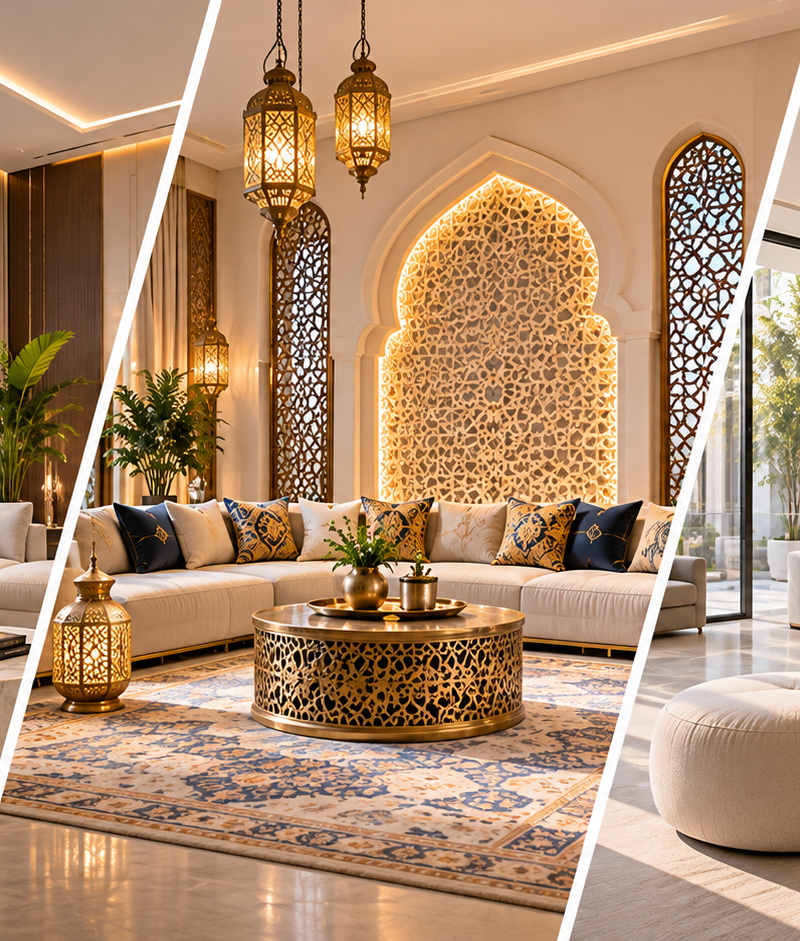
Dubai has no shortage of interior design companies. Search online and you’ll find hundreds of studios promising luxury, creativity and on-time delivery. That’s exactly what makes the choice hard. The best interior designer in Dubai for one person might be completely wrong for another, depending on the property, the budget, the timeline and how involved you want to be.
Choosing well matters. A good designer helps you make better use of space, avoid expensive mistakes, handle building approvals, and end up with a home or workplace that actually works for the way you live. A poor choice can mean delays, budget overruns, disputes with contractors and a finished space that never quite feels right.
This guide walks you through how to choose an interior designer in Dubai step by step. It covers how to define your needs, judge a portfolio, understand pricing and approvals, and know the questions to ask before signing anything. It’s written for homeowners, villa and apartment owners, landlords, investors, agents and commercial property owners, whether this is your first project or your tenth.
To find the best interior designer in Dubai:
- Define your scope, budget and style first.
- Shortlist firms whose portfolios include completed projects similar to yours.
- Check that they hold the right trade license and can manage Dubai approvals.
- Compare how they price and what’s included.
- Speak to past clients.
- Only sign once you have a clear written contract covering scope, payments, timelines and defects.
The right fit is the firm that understands your brief and shows a reliable process, not simply the one with the most impressive renders.
Understand Your Interior Design Requirements First
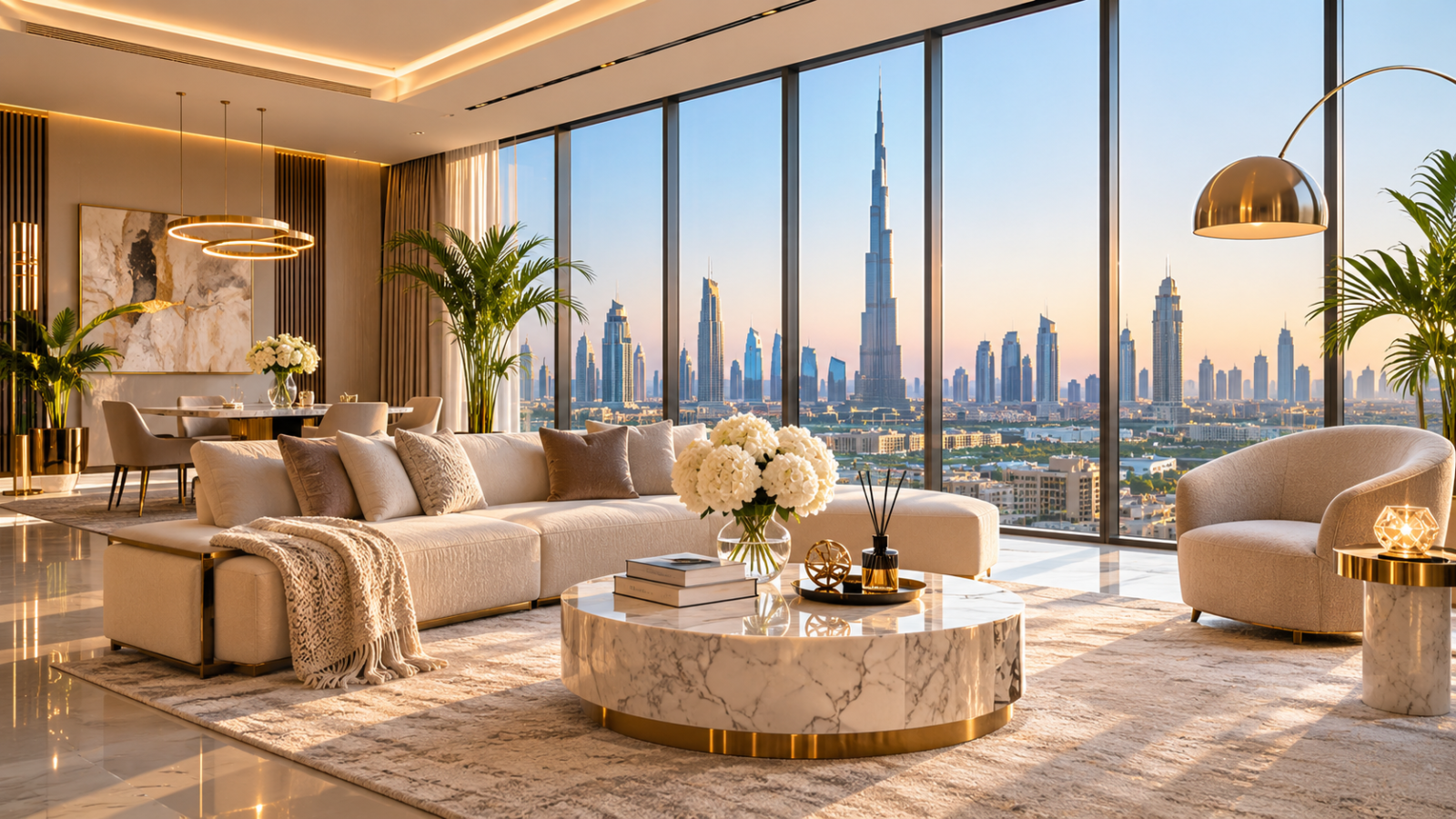
Before you contact a single studio, get clear on what you actually need. It makes every conversation more productive and helps you spot which firms are a genuine fit.
Ask yourself:
- What type of property is it? A Dubai Marina apartment, a family villa in Arabian Ranches or Dubai Hills, a rental unit, an office or a retail space all need different skills.
- What’s the scope? Styling and furnishing only, a room-by-room refresh, or a full renovation with layout, kitchen, bathroom, lighting and MEP changes?
- Who is it for? Your own home, a rental where durability matters most, or an investment you plan to sell?
- What’s your budget range? Include design fees, construction, furniture, approvals and a contingency.
- What’s your timeline? Do you need to move in, hand over to a tenant or open a business by a fixed date?
- How involved do you want to be? Some clients want to approve every tile. Others prefer a turnkey service from concept to keys.
A simple one-page brief with photos of spaces you like, a rough budget and your must-haves will save time and make quotes much easier to compare.
Design-only, turnkey or furnishing?
Most interior design services in Dubai fall into a few models:
| Service model | What you get | Best for |
| Design and consultation only | Concept, layouts, drawings, material and furniture selections | Owners with their own contractor, or who want to tender the build |
| Design and build (turnkey) | Design plus construction, fit-out and project management by one company | Busy owners who want a single point of responsibility |
| Furnishing and styling | Furniture, lighting, soft furnishings and decor without major works | New handovers, rentals and quick upgrades |
| Specialist add-ons | Smart home, landscaping, joinery, lighting design | Projects that need a wider scope |
If you want everything handled together, look for a firm offering fit-out and renovation alongside design. If the shell is already in good shape, full furnishing may be all you need.
Check the Designer’s Portfolio and Previous Projects
A portfolio is the clearest evidence of what a designer can actually deliver. Look beyond the most glamorous images.
- Completed projects, not just renders. 3D visualisations are useful, but photographs of finished spaces show real build quality.
- Similar properties. If you own a villa, look for villa interior design Dubai work at a similar scale. If it’s an apartment, check they understand tighter layouts and building rules.
- Range of styles. A strong designer can work in different styles rather than repeating one look for every client.
- Details. Zoom in on joinery, ceiling details, lighting, tiling and how materials meet. That’s where quality shows.
- Before and after. These show how the designer solves real problems, not just how they decorate empty rooms.
Where possible, ask whether you can visit a completed project or a site in progress. A good firm will usually be happy to arrange it, with the client’s permission.
Evaluate Residential and Commercial Experience
Residential and commercial work need different strengths.
Residential interior design Dubai
Home projects are personal. The designer needs to understand how a family lives, plan practical storage, choose durable finishes for children and pets, and design for Dubai’s heat and light. Villas often bring extra layers such as majlis rooms, maids’ quarters, outdoor living and pools. Apartments demand clever space planning and careful coordination with building management. If you’re focused on a home, look closely at a firm’s residential interior design work.
Commercial interior design Dubai
Offices, clinics, shops, restaurants and showrooms bring different priorities: brand identity, staff and customer flow, durability, accessibility, fire and life-safety requirements, and tight timelines because closed premises cost money. Commercial projects usually involve more authority approvals and stricter scheduling. Ask for commercial examples specifically if that’s your project.
Luxury interior design Dubai
At the luxury end, think high-end villas on Palm Jumeirah, Emirates Hills or Jumeirah Bay, or penthouses in Downtown Dubai. Here, sourcing becomes as important as design: imported stone, bespoke joinery, statement lighting, curated art and integrated technology. Ask how the firm manages long lead times and quality control on imported items.
Understand Their Design Process and Project Management
Great ideas mean little without a reliable process behind them. Ask each firm to walk you through how a typical project runs. A clear process usually looks something like this:
- Consultation and brief. Understanding your needs, budget and timeline.
- Site survey and measurements. Including checks of existing services and conditions.
- Concept design. Mood boards, space planning and initial layouts.
- Design development. 3D visuals, detailed drawings, material and furniture selections.
- Approvals. Submissions to the relevant authorities, master developers and building management where needed.
- Procurement. Ordering materials, furniture and fittings.
- Execution and site supervision. Construction, fit-out and quality checks.
- Snagging and handover. Fixing defects before you move in.
Ask who your day-to-day contact will be, how often you’ll get updates, how changes are approved and priced, and how they handle delays. Firms that also manage specialist trades, such as smart home systems or landscape design, can coordinate these from the start instead of fitting them in at the end.
Check Their Knowledge of Dubai Trends, Materials and Climate
A designer can have a beautiful portfolio and still get the local details wrong. In Dubai, those details really matter.
- Heat and sunlight. Strong sun fades fabrics, warps some timbers and heats up glass-heavy rooms. Look for designers who think about solar shading, window treatments, UV-resistant fabrics and heat-tolerant materials.
- Humidity and AC. Constant air conditioning and humid coastal air affect timber, wallpaper, paint and joinery. Good designers specify materials that stay stable and leave proper access for AC servicing.
- Dust and maintenance. Finishes should be practical to clean in a dusty climate, especially in family homes and rentals.
- Building and community rules. Many towers and communities have strict rules on working hours, noise, debris removal and which changes are allowed. Master developers and owners’ associations may require approvals before work starts.
- Authority approvals. Changes to walls, wet areas, MEP, ceilings or structure usually need permits from Dubai Municipality or the relevant free-zone authority, plus building NOCs. Electrical load changes and fire-system changes may involve DEWA and Civil Defense.
- Lifestyle and culture. Majlis spaces, separate kitchens, generous storage, guest areas and privacy are common needs in UAE homes.
On trends for 2027, expect continued demand for warm minimalism, natural textures, integrated smart lighting and climate control, indoor-outdoor living and sustainable, low-maintenance materials. A designer who knows the trends but also knows when not to follow them will give you a space that lasts.
Compare Interior Design Packages, Services and Pricing
Interior design project cost in Dubai varies enormously with scope, finish level, property size and how much of the work the designer delivers. Before comparing numbers, make sure you’re comparing the same scope.
Common pricing models
| Pricing model | How it works | Watch out for |
| Fixed fee | One agreed price for a defined design scope | Changes outside the scope are charged as extras |
| Percentage of project | A percentage of the build or furnishing cost, often quoted around 10–20% in published Dubai guides | Cost rises as the project grows, so agree a cap |
| Hourly | Charged per hour; published Dubai ranges run from roughly AED 250 to AED 900 per hour depending on seniority | Totals are hard to predict without an estimate |
| Per square foot | A rate multiplied by the area | Can penalise small or complex spaces |
Indicative 2027 cost ranges
These are third-party published market ranges for Dubai, not DA Interior Design & Decor’s prices. Treat them as a starting point only.
| Project level | Indicative full design-and-build cost | Typical scope |
| Basic refresh or rental upgrade | from around AED 250–450 per sq ft | Cosmetic upgrades, limited layout change |
| Mid-market apartment or townhouse | around AED 450–900 per sq ft | Kitchens, bathrooms, joinery, lighting |
| Premium villa | around AED 900–1,400 per sq ft | Higher-spec finishes, full fit-out |
| Luxury villa or penthouse | around AED 1,400–2,000+ per sq ft | Bespoke design, imported materials, full FF&E |
On top of design and build, budget for authority and building approvals, imported furniture and lead times, 5% VAT and a contingency for surprises once work begins. A good interior design consultation in Dubai should give you a clear, itemised breakdown so you can see exactly where the money goes.
The cheapest quote is rarely the best value. Check what’s included: drawings, 3D visuals, approvals, site supervision, procurement and snagging. Then compare the scope line by line.
Read Client Reviews, Testimonials and Reputation
Reviews help you see how a firm behaves when things get difficult, not just how its projects look in photos.
- Look at independent platforms, such as Google reviews, Houzz-style directories and social media, not just testimonials on the company’s own website.
- Read the detailed reviews. Comments about communication, budget control, timelines and after-sales support are more useful than “beautiful work”.
- Notice how the firm responds to negative feedback. A calm, constructive reply is a good sign.
- Ask for references you can speak to directly, ideally from a recent project and one completed a while ago, so you can hear how the work has held up.
- Check the basics: a valid trade license, a registered business address and proper insurance for any firm carrying out construction work.
If you’re an investor or landlord with apartment interior design Dubai projects across several units, ask for references from other portfolio clients. They’ll tell you how well the firm handles repeat work and tight handover dates.
Questions to Ask Before Hiring an Interior Designer in Dubai
These are the questions to ask an interior designer before you commit. The answers will tell you a lot about how the project will really run.
About experience
- Have you completed projects similar to mine in size, type and budget?
- Can I see photographs of finished work, and speak to past clients?
- Have you worked in my building or community before?
About scope and process
- What exactly is included in your fee, and what isn’t?
- Do you handle construction and fit-out yourselves, or work with contractors?
- Who will be my main contact, and how often will I get updates?
- How do you handle approvals from authorities, master developers and building management?
About cost and contract
- How do you charge: fixed fee, percentage, hourly or per sq ft?
- What is the payment schedule, and how are payments linked to milestones?
- How are changes and variations priced and approved?
- Is VAT shown separately on your quotations?
- What happens if the project runs late?
About quality and aftercare
- How do you control quality on site?
- How long is your defects period after handover, and what does it cover?
- Can I see a sample contract before paying a deposit?
About credentials
- What is your trade license number, and does it cover both design and fit-out work?
- Do you carry professional indemnity and, for construction work, liability insurance?
Common Mistakes to Avoid When Choosing an Interior Designer
- Choosing on renders alone. Beautiful 3D images don’t guarantee good construction. Ask for completed projects.
- Picking the lowest quote without comparing scope. A cheaper quote often leaves out supervision, approvals, procurement or snagging.
- Skipping the written contract. Verbal promises are hard to enforce. Get scope, payments, timelines and defects terms in writing.
- Ignoring approvals. Starting work without the right permissions can lead to fines, stop-work notices and problems when you sell or lease.
- Paying too much upfront. Link payments to clear milestones instead of large advance payments.
- Underestimating lead times. Imported furniture, stone and custom joinery can take far longer than expected. Plan around them.
- Not setting a contingency. Older properties especially can reveal hidden issues once walls and floors are opened up.
- Choosing a style that won’t age well. For rentals and resale, timeless and durable usually beats bold and trendy.
Why Choose a Professional Interior Design Company in Dubai?
It’s possible to hire a freelance designer and separate contractors, and for small styling jobs that can work well. For larger projects, a professional interior design company in Dubai brings clear advantages:
- One coordinated team across design, procurement and fit-out, so fewer things fall between the cracks.
- Experience with local approvals, building rules and community requirements.
- Established supplier relationships for materials, furniture and specialist trades.
- Project management that keeps budgets, schedules and quality on track.
- Clear accountability, with one contract and one point of contact when something needs fixing.
- Joined-up services, so design, renovation, furnishing, smart home technology and outdoor spaces work together instead of being added piece by piece.
For villa owners, that might mean planning interiors, landscape design and smart home integration as one project. For apartment owners and investors, it often means a fast, well-managed refresh with full furnishing ready for move-in or rental. For commercial clients, it means a fit-out that respects brand, operations and deadlines.
Frequently Asked Questions
How do I choose the best interior designer in Dubai?
Start with a clear brief and budget. Then shortlist firms with completed projects similar to yours, check their license and process, compare what each quote includes, and speak to past clients before signing a written contract.
How much does an interior design project cost in Dubai?
It depends on size, scope and finish level. Published Dubai market guides put full design-and-build projects anywhere from around AED 250 per sq ft for a basic refresh to over AED 2,000 per sq ft for luxury villas and penthouses. Design-only fees are often quoted as a fixed fee, an hourly rate or a percentage of the project. Always ask for an itemised quote.
What’s the difference between an interior designer and an interior design company in Dubai?
An individual designer usually focuses on concept and design. An interior design company in Dubai typically offers a wider team that can also manage approvals, procurement, fit-out and project management under one contract.
Do I need approvals for interior design work in Dubai?
Often, yes. Cosmetic changes may not need permits, but work on walls, wet areas, ceilings, MEP or structure usually needs authority approvals and building or community NOCs. A professional firm should handle or guide you through this.
How long does an interior design project take in Dubai?
It varies from a few weeks for furnishing and styling to several months for a full villa renovation. Approvals, custom joinery and imported furniture are usually what take longest, so ask for a realistic schedule upfront.
What should I prepare before an interior design consultation in Dubai?
Bring floor plans if you have them, photos of the space, images of styles you like, a budget range, your timeline and a list of must-haves. The clearer your brief, the more useful the consultation.
Are interior design companies in Dubai able to work across other emirates?
Many interior design companies in Dubai also take on projects in Abu Dhabi, Sharjah and the other emirates, but coverage varies. Always confirm the firm can manage approvals and site supervision in your emirate before you sign.
Conclusion: Choosing the Best Interior Designer in Dubai for You
The best interior designer in Dubai is the one whose experience, process and communication match your project, not simply the one with the flashiest portfolio. Take time to define your needs and check completed work. Make sure you understand pricing and approvals, ask the right questions, and get everything in writing. With professional interior designers who understand Dubai’s climate, building rules and lifestyle, your home or business can look beautiful and work well for years to come.
Talk to DA Interior Design & Decor About Your Project
If you’re planning a villa, apartment or commercial interior and want expert guidance from concept to completion, DA Interior Design & Decor is here to help. Our services include residential interior design, fit-out and renovation, full furnishing, smart home solutions and landscape design.
Contact DA Interior Design & Decor to book an interior design consultation and share your project requirements. We’ll talk through your goals, budget and timeline, and recommend the right next steps.



Leave a Reply