
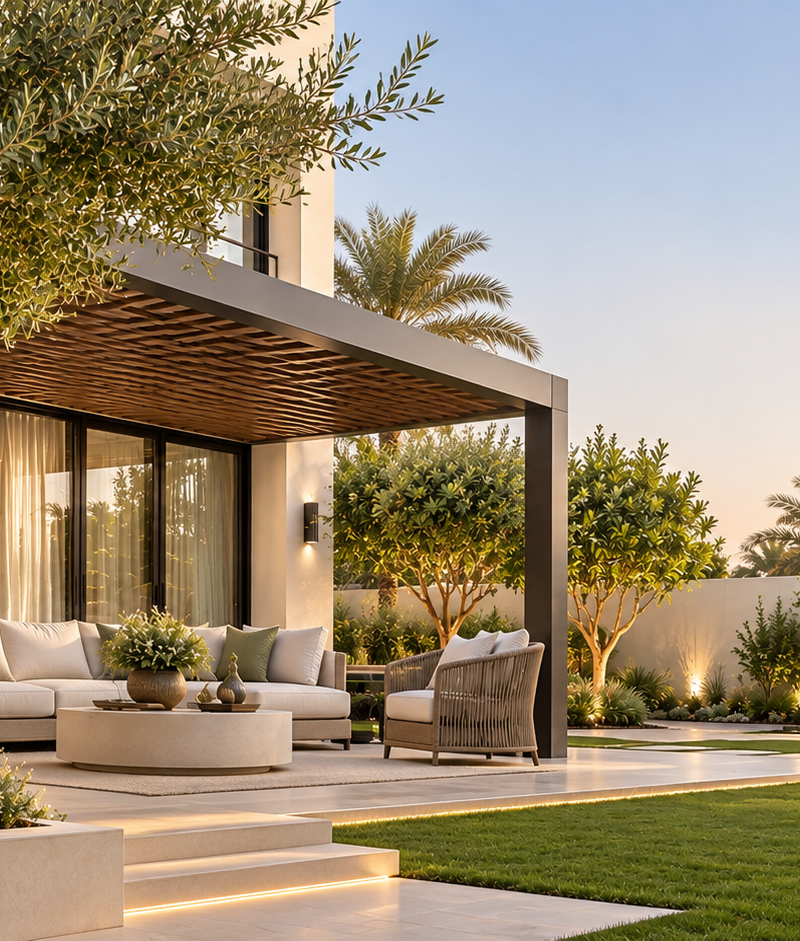
A villa garden in Dubai can be the best room in the house for half the year and almost unusable for the other half. Good landscape design Dubai homeowners can enjoy year-round starts with two things: plants that cope with heat, salt and little water, and shade that makes outdoor space comfortable when the sun is at its strongest. Professional landscape design services help you get both right from the start.
This 2027 guide explains how to plan a villa garden for the UAE climate: choosing heat-tolerant planting, creating shade with trees and structures, saving water with smart irrigation, and laying out a garden that works for your family.
Why Landscape Design in Dubai Is Different
Gardens here face conditions few climates combine:
- intense summer heat and strong sun
- very little rainfall, with occasional heavy downpours
- sandy, often salty soil
- dust and wind
- high water costs for irrigation
That means many plants that thrive in cooler, wetter countries struggle here, while well-chosen local and drought-tolerant species can flourish with far less care. Landscape design in Dubai is as much about working with the climate as it is about looks.
Start with a Site Analysis
Before choosing a single plant, a good designer looks at:
- sun and shade: which areas get full afternoon sun, and which are shaded by the villa or walls
- soil: sandy, salty or compacted soil may need improving
- drainage: where water collects after rain or irrigation
- wind: exposed corners may need screening
- existing trees and plants: what’s healthy and worth keeping
- how you’ll use the garden: dining, children’s play, pool, entertaining, privacy
This shapes everything that follows, from plant choice to where the seating goes. If you’re renovating the villa too, review villa renovation costs in Dubai at the same stage so indoor and outdoor budgets are planned together.
Planting for the UAE Climate
Choose native and drought-tolerant plants
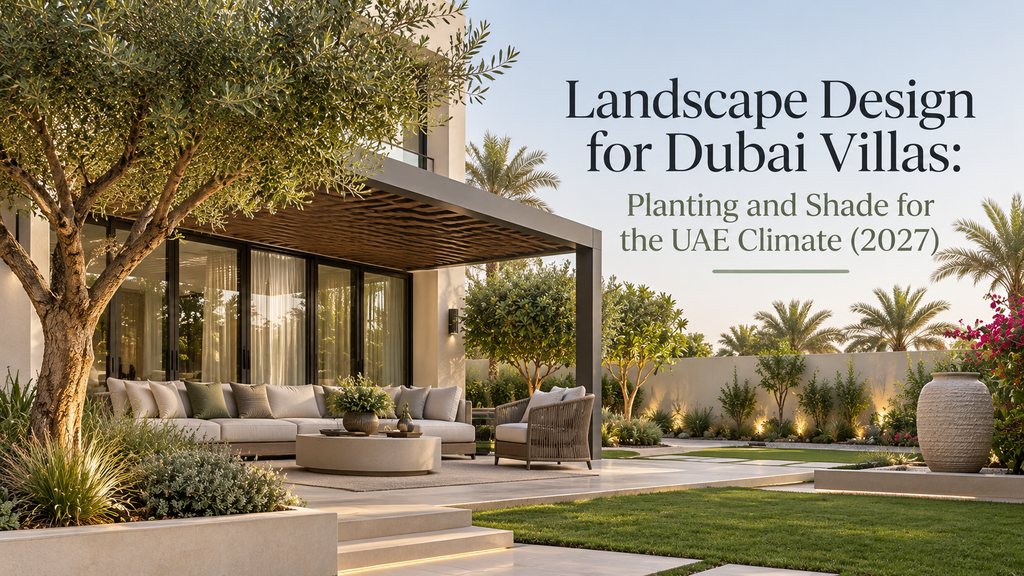
Native and drought-tolerant plants are adapted to heat and dry conditions. The National reports that UAE natives such as date palms and ghaf trees are well suited to the dry, salty desert environment, and that some native species need on average 75% less water in nursery conditions than the tropical plants long used in UAE landscapes.
Useful choices for villa gardens include:
- trees: ghaf, date palm, sidr and other shade trees suited to local conditions
- flowering shrubs: bougainvillea and desert rose, both widely recommended by local gardeners for heat tolerance
- hedges and screens: hardy shrubs that tolerate wind and sun
- ground covers and grasses: low-water ground covers in place of large lawns
Some popular drought-tolerant plants, such as oleander, are toxic if eaten, so check plant safety if you have young children or pets.
Group plants by water needs
Place thirstier plants together, usually in shadier spots near the house, and keep the hardiest species in the sunniest, most exposed areas. This makes irrigation more efficient and keeps plants healthier.
Be realistic about lawns
Natural lawns need a lot of water and care in Dubai. Many owners keep a small lawn for children and use paving, gravel, ground covers or artificial grass elsewhere.
Improve the soil
Sandy or salty soil often needs organic matter and suitable planting mix in beds and tree pits so roots can establish.
Creating Shade in a Dubai Villa Garden
Shade is what turns a hot garden into a usable one.
Shade trees
Well-placed trees cool the ground, shade windows and create comfortable spots for seating. Plant them where their mature size won’t damage walls, pools or paving.
Pergolas and shade structures
Aluminium or timber pergolas, shade sails and covered seating areas give instant shade while trees grow. Louvred roofs let you adjust shade through the day.
Planting around seating areas
Climbing plants on pergolas, hedges and planters soften hard surfaces and add natural shade and privacy.
Use lighter, cooler surfaces
Lighter paving and stone generally feel cooler underfoot than dark surfaces, and planted areas stay cooler than large expanses of hard landscaping.
Smart Irrigation and Water Saving
Irrigation is the biggest running cost of a Dubai garden. Dubai Municipality itself uses IoT-connected smart irrigation in its public landscaping to improve water efficiency. A water-wise garden also pairs naturally with sustainable luxury interiors inside the home. At villa scale:
- use drip irrigation for beds, shrubs and trees
- set up separate zones for lawns, beds and trees
- install a smart controller that adjusts schedules
- water early morning or evening to reduce evaporation
- add mulch to keep moisture in the soil
- check regularly for leaks and blocked emitters
Garden Layout Ideas for Dubai Villas
Outdoor living and dining
A shaded terrace next to the villa, with a dining table, lounge seating and perhaps an outdoor kitchen, becomes an extra room for the cooler months. Planning it alongside your residential interior design keeps finishes and colours consistent from living room to terrace.
Poolside planting
Choose plants that won’t drop heavy leaf litter into the pool, and keep thorny or spiky species away from walkways.
Privacy and screening
Hedges, tall planters, screens and trees can block views from neighbours and the street, especially in closely spaced communities.
Children’s play and family space
A small lawn or soft play area within sight of the house, shaded in the afternoon.
Garden lighting
Low-level path, step and tree lighting makes evenings, when it’s cooler, the best time to enjoy the garden.
Landscape Ideas for Dubai Villa Communities
- Compact gardens in communities like the Springs, the Meadows and Mudon benefit from layered planting along boundaries, a shaded seating corner and minimal lawn.
- Larger plots in Emirates Hills, Al Barari, Jumeirah Islands and Palm Jumeirah allow shade trees, separate garden zones and planting around pools and terraces.
- Family villas in Arabian Ranches, Dubai Hills Estate and Jumeirah Park often combine a small lawn, a shaded dining terrace and screening from neighbours.
- Coastal plots on Palm Jumeirah and in Jumeirah need plants that tolerate salt spray and wind.
You can see how indoor and outdoor spaces come together in our completed projects. Check your community’s guidelines before adding structures, boundary planting or major changes to the front garden.
Common Landscape Design Mistakes in Dubai
- choosing plants for looks alone, not climate
- large lawns that are expensive to water
- no shade over seating areas
- planting trees too close to walls, pools or pipes
- ignoring drainage
- one irrigation schedule for every plant
- no plan for evening lighting
- forgetting maintenance access
How to Plan Your Garden Project
- Decide how you want to use the garden.
- Arrange a site visit and analysis.
- Agree a concept: layout, planting and shade.
- Review detailed drawings and plant lists.
- Check community approvals where needed.
- Install hard landscaping, irrigation and lighting first.
- Plant and mulch.
- Set irrigation schedules and maintenance routines.
How DA Interior Design & Decor Can Help
DA Interior Design & Decor’s landscape service covers consultation and planning, site analysis of topography, soil and existing plants, conceptual design with layout, hardscaping and plant selection, detailed construction documents, and installation with experienced contractors. Because the studio also handles fit-out and renovation, garden and villa works can be planned as one project.
FAQs: Landscape Design in Dubai
What plants grow best in Dubai villa gardens?
Native and drought-tolerant species such as ghaf, date palm, sidr, bougainvillea and desert rose generally cope well with heat and low water.
How can I make my garden cooler in summer?
Add shade trees, pergolas or shade sails over seating, use lighter paving, and plant around hard surfaces.
Is a natural lawn practical in Dubai?
It’s possible, but it needs regular irrigation and care. Many owners keep a small lawn and use low-water planting or paving elsewhere.
How do I reduce garden water use?
Choose drought-tolerant plants, group them by water needs, use drip irrigation with a smart controller and add mulch.
Do I need approval for landscaping in my villa community?
Simple planting usually doesn’t, but structures, boundary changes and front-garden works may need community approval. Check your community’s guidelines.
When is the best time to plant in Dubai?
The cooler months are generally easier for new plants to establish than the peak of summer.
Final Thoughts
Successful landscape design in Dubai works with the climate: climate-suited plants, real shade, efficient irrigation and a layout built around how your family uses the garden. Plan these together and your villa garden can be enjoyed for far more of the year.
Planning your garden? Contact DA Interior Design & Decor on +971 56 378 7002 to book a consultation.


Leave a Reply